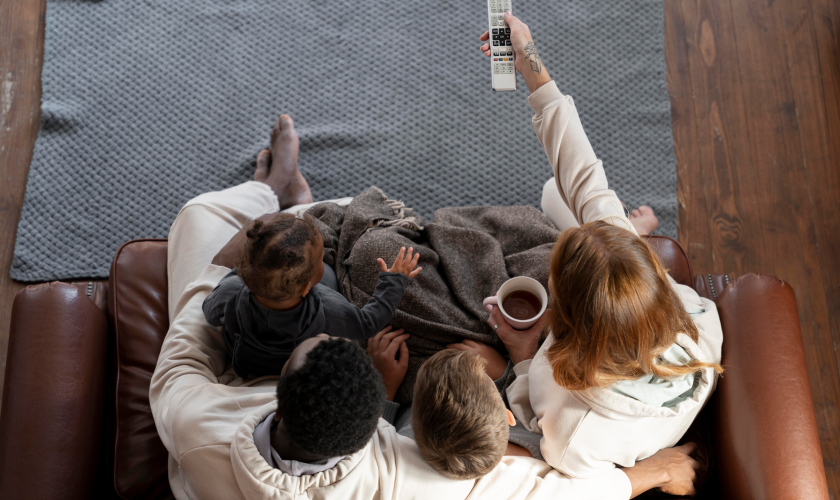
Smart home automation is the practice of unifying a home's lighting, audio, video, climate, shades, and security into one controlled system you run from a phone, a handheld remote, or a wall panel. Instead of juggling a separate app or switch for every device, you control the whole house from one place, and you can trigger several things at once. One tap can dim the lights, lower the shades, turn on the TV, and set the thermostat for movie night. That coordination, more than any single gadget, is what makes a home genuinely smart.
People often use "smart home" to mean a stack of standalone gadgets: a smart speaker here, a video doorbell there, a thermostat that lives in its own app. Real automation is the layer above all of that. It connects the pieces so they behave as one system, and it is exactly what our smart home automation service is built to deliver in the Inland Empire.
How smart home automation works
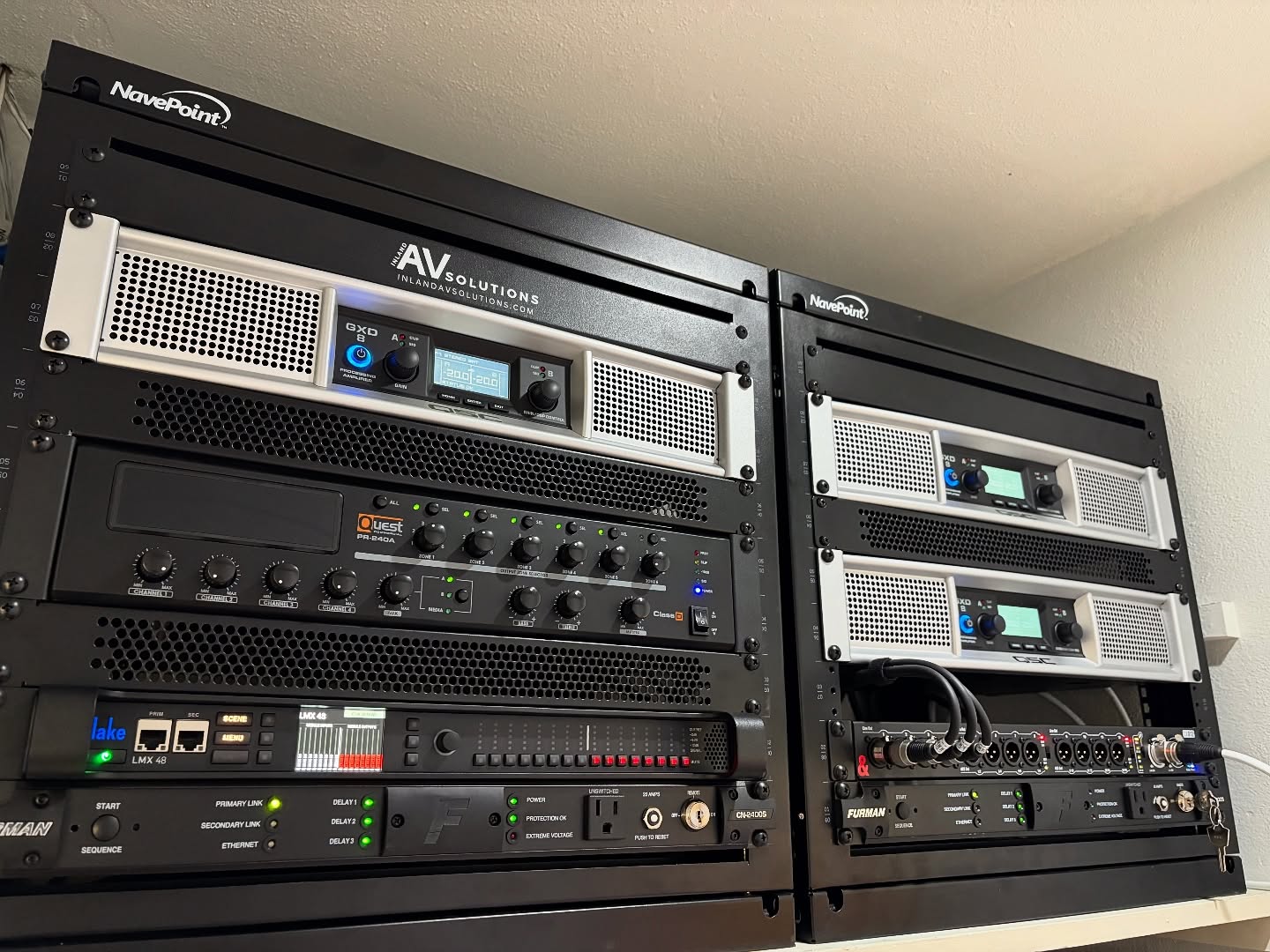
At the center of every automated home is a controller, often called a hub. The controller is the brain that talks to every connected device and gives them a common language, so a lighting keypad, a set of speakers, and a thermostat that were never designed to work together suddenly cooperate. When you press a button, the controller decides what should happen across the whole house and makes it happen in the right order.
On top of that controller sits the way you actually operate the home. Most systems offer several at once: a mobile app on your phone, a handheld remote for the living room, a wall-mounted touch panel by the door, and voice commands through a speaker. The same instruction reaches the same controller no matter how you give it, so anyone in the household can use whatever is closest.
The most useful idea in automation is the scene. A scene is a single command that acts on many devices. A "Good Morning" scene might raise the shades, start the coffee, bring up the kitchen lights, and play a news station. A "Leaving" scene might turn everything off, lock the doors, and arm the cameras. You are not managing devices one at a time, you are telling the house what you want, and the controller handles the rest. Inland AV Solutions is a certified Control4 dealer, and Control4 is the platform we use to build that hub and the scenes on top of it. You can read more about that layer on our control and automation page.
What smart home automation can control
Once a home is on one platform, almost any modern subsystem can join it. The common building blocks are:
- Lighting, from single-room dimming to whole-home lighting control with scenes and schedules that follow the time of day.
- Audio and video, including whole-home and multi-room audio so music can play in one room or every room, plus TVs, media rooms, and home theaters.
- Climate, with thermostats that adjust automatically for comfort and efficiency, and can be set from anywhere.
- Shades and window treatments that open and close on a schedule, with a scene, or to manage heat and glare.
- Security and cameras, tying door locks, video doorbells, alarm sensors, and residential security cameras into the same interface as everything else.
Because it all lives on one system, the subsystems can talk to each other. A camera that detects motion at night can trigger the exterior lights. An alarm can pause the music and bring up every screen in the house. That cross-talk between systems is only possible when they are integrated rather than installed as islands.
Wired versus wireless, and why professional integration matters
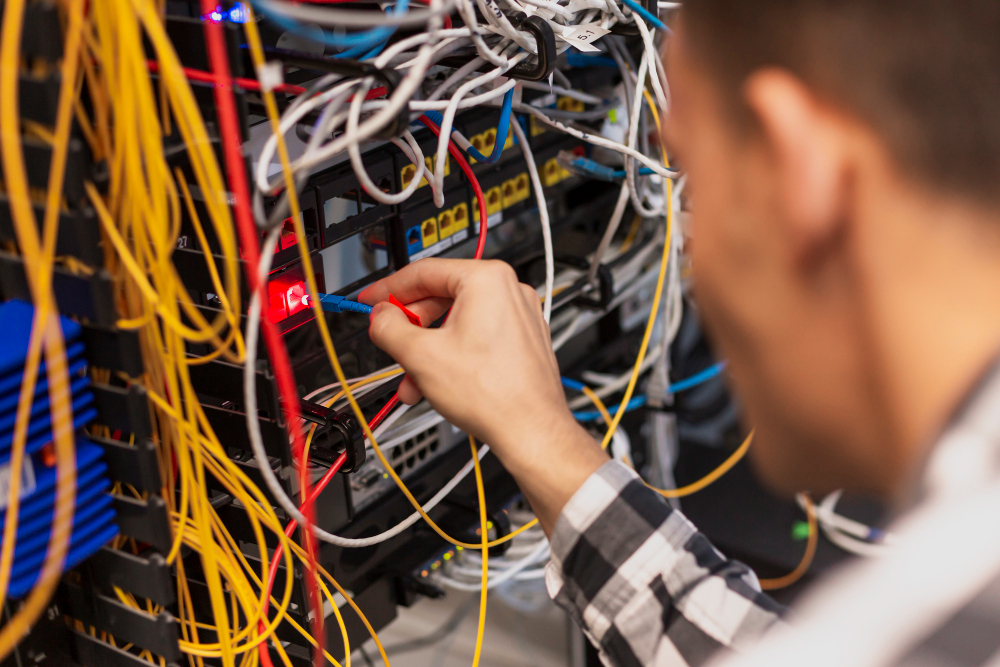
One of the first questions homeowners ask is whether automation is wired or wireless. The honest answer is that a good system is usually both. Tasks that move a lot of data or that must never drop, like video distribution and the core network, are typically wired for reliability. Devices like lighting controls, locks, sensors, and thermostats often connect wirelessly, which is what lets automation work in an existing home without tearing open every wall. A strong, well-designed network sits underneath all of it, which is why a solid home network and Wi-Fi foundation is part of any serious automation project.
This is also where professional integration earns its place. Buying a box of smart devices and connecting each to its own app leaves you with a drawer full of remotes and apps that do not talk to each other. A professional integrator designs the whole system as one: choosing hardware that works together, running and hiding the wire that should be wired, configuring the controller, building scenes around how your family actually lives, and then training everyone so it is genuinely easy to use. It is the difference between a pile of gadgets and a home that responds. Our broader residential audio-visual work is built on this same principle.
Getting started in the Inland Empire
Smart home automation does not have to be an all-at-once project. Many homeowners start with one area, such as lighting or a media room, on a platform that can grow later. The important decision early on is choosing a system that will expand cleanly, so adding shades or cameras next year does not mean starting over.
Inland AV Solutions designs, installs, and supports automated homes across San Bernardino and Riverside counties. As a certified Control4 dealer, we begin by looking at the home you have and the way you live in it, then design a system that fits both. If you are weighing whether to automate a new build or upgrade the home you are in, that conversation is the best first step.
Inland AV Solutions designs, installs, and supports smart home automation for homes across San Bernardino and Riverside counties. Let's talk about yours.
Request a Quote